

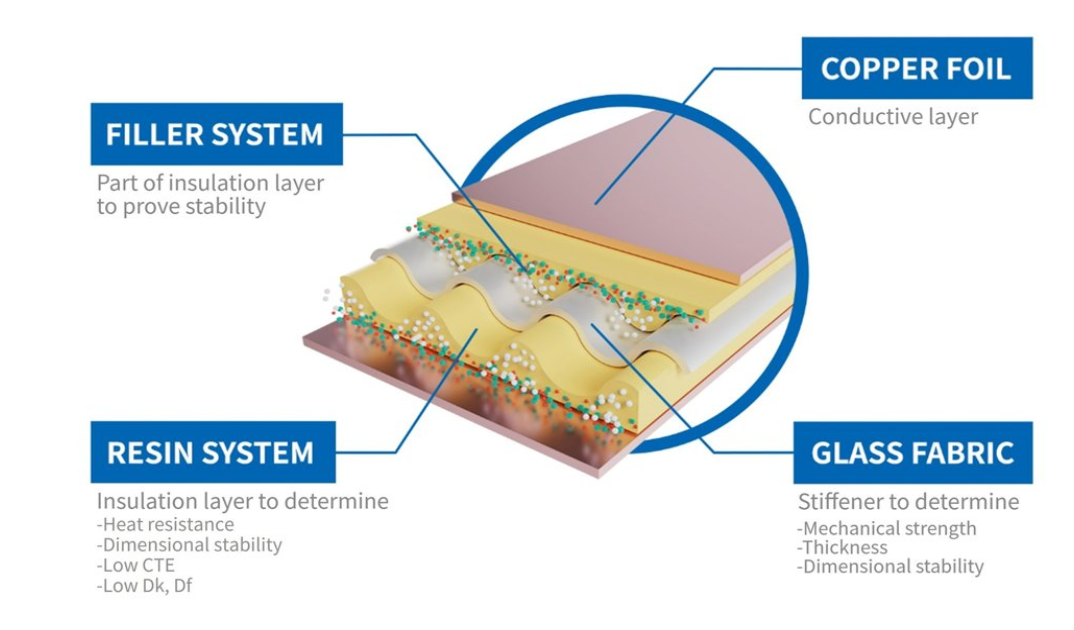
Currently, the explosive development of the artificial intelligence (AI) industry is injecting strong momentum into the PCB (Printed Circuit Board) industry. The global PCB industry has officially entered a new upward cycle, coupled with the arrival of an upstream raw material price hike wave, the industry pattern is facing new adjustments and opportunities.
AI Computing Power Explodes as the Core Growth Engine of the PCB Industry
Since 2024, the construction of AI-driven computing power infrastructure has entered an explosive period, with a surge in demand for core equipment such as switches and AI servers. At the same time, coupled with the AI innovation iteration in the smartphone and PC fields, as well as the volume and price increase brought by the electrification and intelligence process of automobiles, the resonance of multiple positive factors has directly driven the continuous growth of demand for high-end PCB products such as HDI (High-Density Interconnect) boards and high-layer boards.
According to data from authoritative institution Prismark, the global PCB output value reached 73.565 billion US dollars in 2024, a year-on-year increase of 5.8%, which intuitively reflects the overall high prosperity of the industry. It is worth noting that the value of AI server PCBs is significantly higher than that of ordinary servers, with more layers and stricter process requirements, becoming the core force driving the high-end upgrading of the industry. The gross profit margin of related products of some enterprises is significantly better than that of ordinary PCB products.
apanese Giants Take the Lead in Price Hikes, Triggering a Price Increase Wave for CCL
The latest dynamics from the industrial end show that the price of upstream raw materials for PCBs is facing a sharp increase, and the industry price hike trend is continuing to heat up. Japanese semiconductor material giant Resonac took the lead, raising the prices of Copper Clad Laminate (CCL) and bonding films by more than 30% starting from March 1st.
Shortly after, another major Japanese electronic materials manufacturer, Mitsubishi Gas Chemical, also issued a price increase notice in March, announcing that it would uniformly raise the prices of all its products including Copper Clad Laminate (CCL), prepreg, CRS (Copper Foil Resin Sheet) by 30% starting from April 1st. It is reported that the price increase is mainly due to the skyrocketing raw material prices, rising labor and transportation costs, which have led to the deterioration of the company's profitability, and the adjustment is made to ensure the stable supply of products. The market generally expects that the upward pressure on upstream materials will gradually be transmitted downward, and high-end manufacturing links such as HDI boards, IC substrates, and high-frequency and high-speed PCBs will be gradually affected.
Broad Market Prospects, Institutions Are Optimistic About Long-Term Growth Potential
With the accelerated implementation of AI application scenarios, PCB, known as the "mother of electronic products", will continue to increase in value and importance in AI chips and computing power equipment. Industry insiders said that the process requirements of AI server PCBs are much higher than those of ordinary servers, with the number of layers increased to more than 20, and its value is 5 to 6 times that of ordinary server PCBs, and the market demand space continues to expand.
Institutional forecast data shows that according to CSC Financial's calculation, the PCB market space corresponding to GPU + ASIC servers will exceed 40 billion yuan in 2025 and is expected to break through 90 billion yuan in 2026, achieving a doubling of growth rate; Guosheng Securities predicts that the global PCB output value will reach 96.8 billion US dollars by 2029, with a compound annual growth rate of 5.2% from 2024 to 2029. In addition, Prismark predicts that the compound annual growth rates of multi-layer boards with more than 18 layers and HDI will reach 15.7% and 6.4% respectively from 2024 to 2029, becoming the main driving force for the growth of the PCB market, and the industry has strong long-term growth certainty.